
How Often Should Your Piano Be Tuned?

- How often a piano needs tuning depends on the instrument, how much it is played and the room it lives in.
- Here is a practical guide for pianos in Sri Lanka's climate.
The Manufacturer's Recommendation
Piano makers generally advise regular tuning, and many home pianos are tuned about twice a year. Check the care guidance for your own make and model: how often a piano actually needs tuning depends on how much it is played, the room it lives in and the instrument itself. Pianos used for teaching or performance usually need it more often.
Why Pianos Go Out of Tune
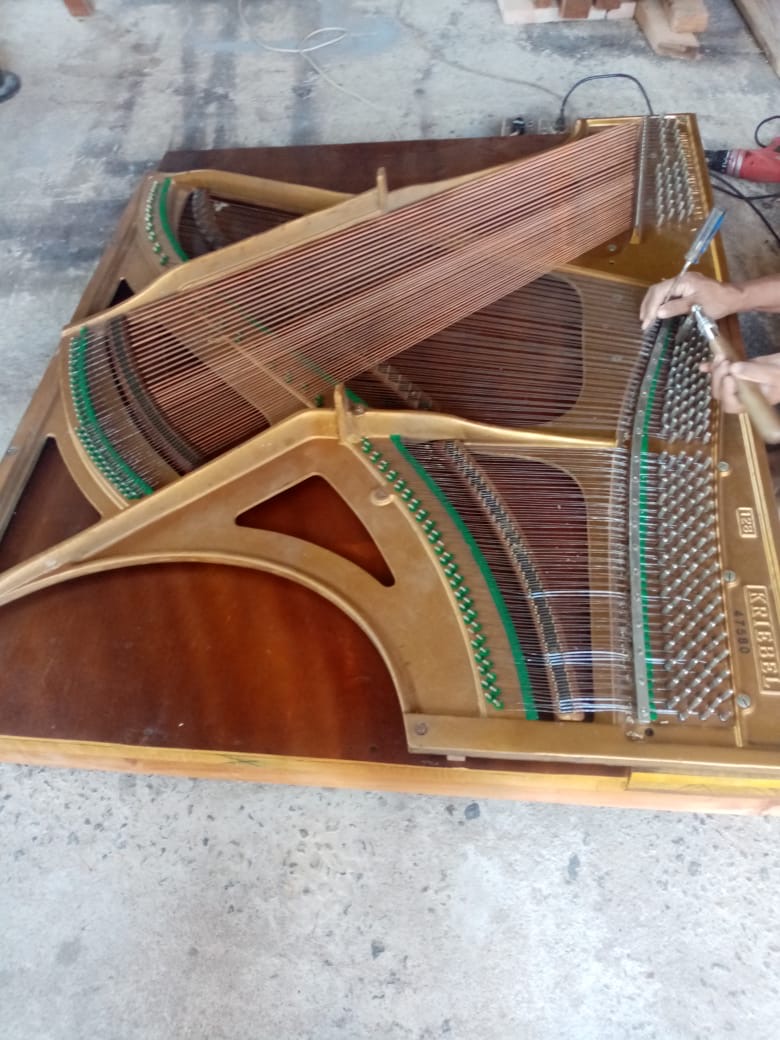
A piano's pitch is governed by the tension of over 200 strings wound tightly around steel tuning pins set in a solid wood pin block. Wood is hygroscopic — it swells and contracts as humidity rises and falls. In Sri Lanka, where humidity can shift dramatically between monsoon and dry seasons, this movement is more pronounced than in temperate climates. As the soundboard expands in humid conditions, string tension increases and pitch rises. As it contracts in dry conditions, pitch drops. This seasonal fluctuation is the primary reason regular tuning is essential.
New Pianos Need More Frequent Tuning
A newly purchased piano, or one that has been moved, requires more frequent tuning in its first year. The strings are still stretching and settling to their target tension. Ranjan Fernando Piano Centre recommends tuning a new instrument three to four times in the first twelve months, then settling into a twice-yearly schedule thereafter.
Signs Your Piano Needs Tuning Now
If you notice that certain notes sound slightly off against others, that chords no longer have the clarity and resonance you expect, or that your piano has not been tuned in over a year, it is time to call a specialist. Leaving a piano significantly out of tune for extended periods can lead to a process known as pitch raising — an extra tensioning pass to return the instrument to correct pitch before fine tuning can begin. At Ranjan Fernando Piano Centre pitch raising is included in the LKR 5,000 tuning fee, but regular tuning keeps the piano more stable and puts less strain on older strings.
A Note on Sri Lanka's Climate
Sri Lanka's tropical climate, with large humidity changes between seasons, places pianos under more stress than in many temperate countries. Many Sri Lankan home pianos benefit from tuning two or three times a year, and instruments used for teaching or performance often need more. After each visit, our technician recommends a schedule suited to your piano and room. Keep your piano in a stable environment, away from direct sunlight, damp locations and direct air-conditioning draughts, and use a hygrometer to monitor changes in humidity.
Professional Piano Tuning
Need Your Piano Tuned?
Tuning is LKR 5,000 overall, pitch raising included if needed, by Master Ranjan Fernando or a tuner he has trained. Home service across Colombo and the Western Province.
Have a Piano Question?
Our master technicians and piano specialists are here to help — whether it's tuning, restoration, or finding your perfect instrument.