
Piano Moving in Sri Lanka: What Actually Happens on Delivery Day
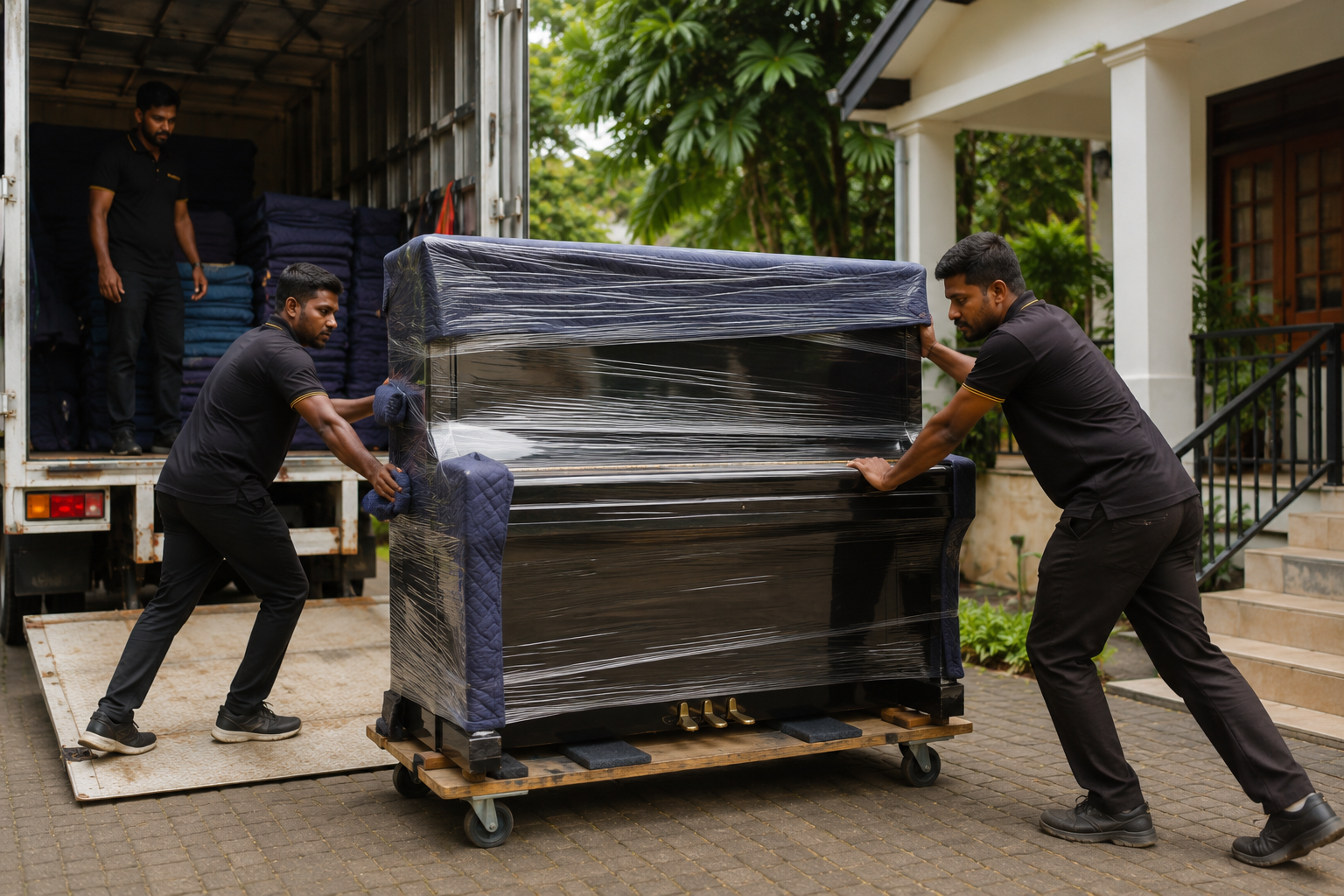
- Piano Moving in Sri Lanka: What Actually Happens on Delivery Day A piano is one of the heaviest, most awkward, and most delicate items most people will ever move in their home.
- If you’ve never had one delivered before, here’s exactly what a professional piano move involves — and why it’s not a job for a regular moving crew.
Piano Moving in Sri Lanka: What Actually Happens on Delivery Day
A piano is one of the heaviest, most awkward, and most delicate items most people will ever move in their home. If you’ve never had one delivered before, here’s exactly what a professional piano move involves — and why it’s not a job for a regular moving crew.
Why Piano Moving Is Its Own Specialty
An average upright weighs 200-300kg, and a grand piano can exceed 400kg, with weight distributed unevenly across delicate legs, castors, and a cabinet that scratches or chips easily. Beyond the sheer weight, the internal mechanism — thousands of moving parts under string tension — can be knocked out of adjustment by rough handling, even if the exterior looks completely undamaged afterward.
What a Proper Piano Delivery Includes
1. Pre-move assessment
A professional crew checks doorway widths, staircases, turns, and floor surfaces before moving day, so there are no surprises when the piano is already in transit.
2. Protective wrapping and equipment
This means padded blankets across every corner and surface, a proper piano skid board or dolly (not a generic furniture trolley), and ratchet straps — not rope — to secure the instrument during transport.
3. Controlled lifting technique
Pianos are moved using leverage and controlled tilting, never lifted flat by brute strength, to protect both the instrument and the moving team.
4. Careful placement in the home
Final positioning accounts for the piano’s weight distribution on the floor, distance from direct sunlight and air-conditioning vents, and enough wall clearance for proper sound projection.
5. Post-move tuning
This is the step most people forget to budget for. Moving a piano — even a short distance within the same room — changes the tension and environment around the strings enough that it should always be tuned again afterward, ideally within a few weeks of settling into its new spot.
Signs a Moving Company Isn’t Equipped for Pianos
• They quote a flat “furniture mover” rate without asking about stairs, doorway width, or piano type
• They plan to use straps or blankets meant for general furniture, not piano-specific equipment
• They don’t mention post-move tuning at all
Questions to Ask Before Booking
• Have you moved this exact type of piano (upright, baby grand, full grand) before?
• What equipment will you use to protect the cabinet and legs?
• Is post-move tuning included, or should that be booked separately?
Moving Soon?
If you have a piano move coming up — whether it’s across Colombo or into a new home anywhere on the island — get a moving quote from a crew that handles pianos exclusively, and ask us to schedule the follow-up tuning at the same time so your instrument sounds right from day one in its new home.
Specialist Transport
Moving a Piano in Sri Lanka?
Safe, island-wide piano moving with protective equipment, hydraulic vehicles, and an experienced handling crew.

Have a Piano Question?
Our master technicians and piano specialists are here to help — whether it's tuning, restoration, or finding your perfect instrument.