
Buying a Piano for Your Child: Age, Size, and What Actually Matters
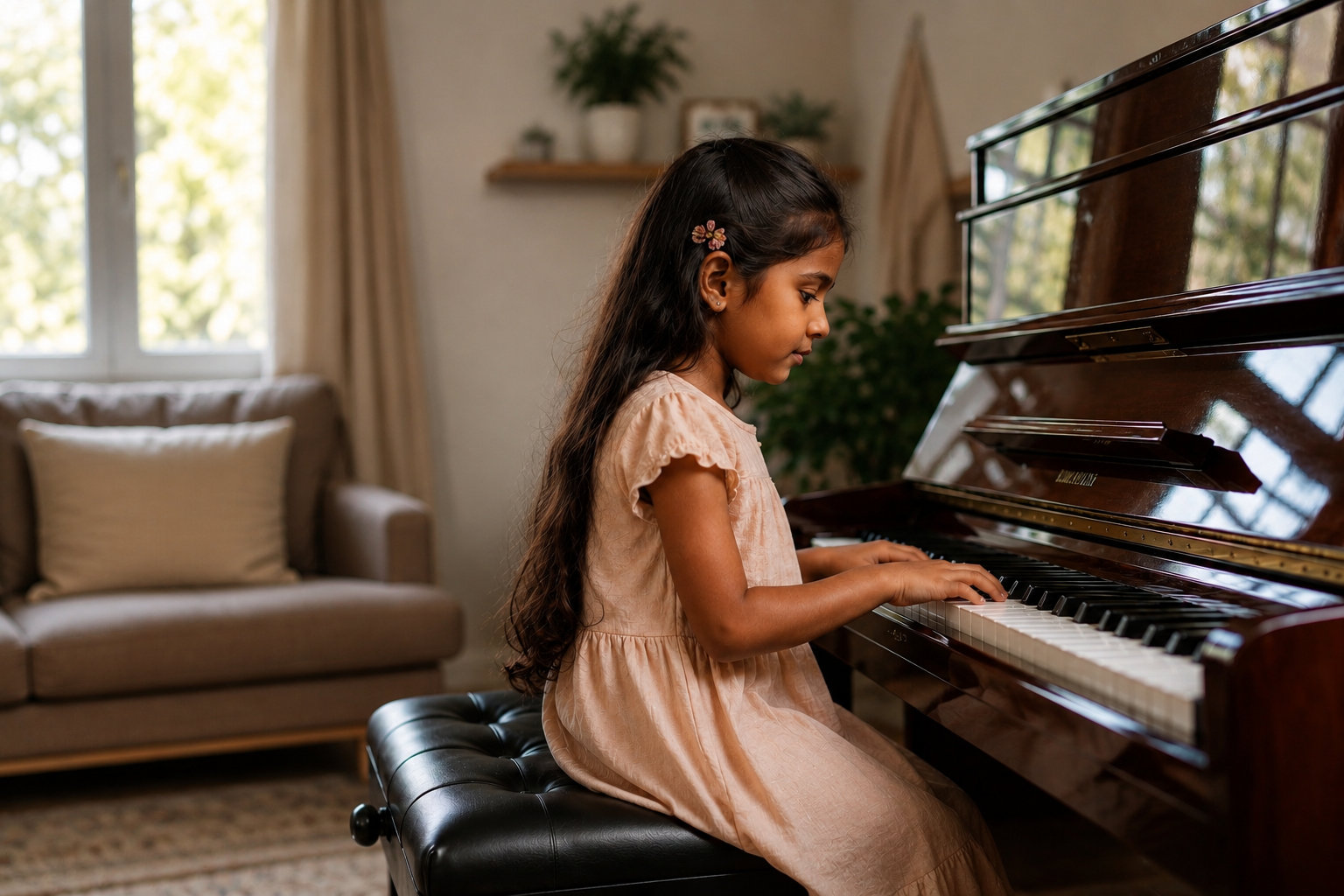
- Buying a Piano for Your Child: Age, Size, and What Actually Matters Parents starting the piano search for a child often get pulled toward the prettiest option in a showroom or the cheapest one online.
- Neither is usually the right lens.
- Here’s what actually matters when the player is a beginner.
Buying a Piano for Your Child: Age, Size, and What Actually Matters
Parents starting the piano search for a child often get pulled toward the prettiest option in a showroom or the cheapest one online. Neither is usually the right lens. Here’s what actually matters when the player is a beginner.
What Age Should a Child Start?
Most teachers agree formal lessons work best from around age 5-6, once a child can sit still, follow multi-step instructions, and has enough hand development to reach an octave comfortably. Starting earlier isn’t necessarily better — a child who begins at 4 out of parental enthusiasm rather than genuine readiness often struggles more than one who starts at 6-7 with real interest.
Does the Instrument Actually Matter for Beginners?
Yes — more than most parents expect. A poor-quality keyboard with unweighted keys teaches the wrong physical habits from day one, and a child who learns on it often needs to unlearn technique later when they move to a proper piano or sit an exam. At minimum, look for:
• Weighted, touch-sensitive keys — even on a digital piano, this matters more than sound quality
• A full 88-key range — smaller keyboards limit repertoire sooner than parents expect
• A sustain pedal — needed from relatively early in most graded syllabuses
Acoustic Upright vs. Digital: What’s Right for a Beginner?
This is where local exam boards matter. If your child will eventually sit ABRSM or Trinity practical exams, the examiner expects the touch and pedal response of an acoustic instrument — so a digital piano is a reasonable starting point for the first 6-12 months, but most teachers recommend transitioning to an upright once the child is clearly committed and progressing past the first couple of grades.
Common Mistakes Parents Make
• Buying too small an instrument to “save space” — a compact 61-key keyboard looks harmless but caps progress within months
• Skipping the sustain pedal because “they’re not ready for it yet” — it’s needed sooner than most parents assume
• Choosing based on furniture aesthetics rather than action quality — a piano that looks perfect in the room but has a stiff, inconsistent action will frustrate a learning child far more than it inspires them
How to Get This Right the First Time
The honest answer is that the right first instrument depends on your child’s age, your teacher’s expectations, and how much space you genuinely have — not a one-size-fits-all recommendation. Book a private consultation and bring your child along; we’ll let them sit at a few instruments and guide you toward what actually fits, without any pressure to buy more piano than they need yet.
Pianos for Sale
Looking for the Right Piano in Sri Lanka?
Explore our hand-inspected collection of pre-owned and new upright and grand pianos, or book a private showroom viewing in Welisara, Ragama.
Have a Piano Question?
Our master technicians and piano specialists are here to help — whether it's tuning, restoration, or finding your perfect instrument.