
What Causes a Piano String to Break?
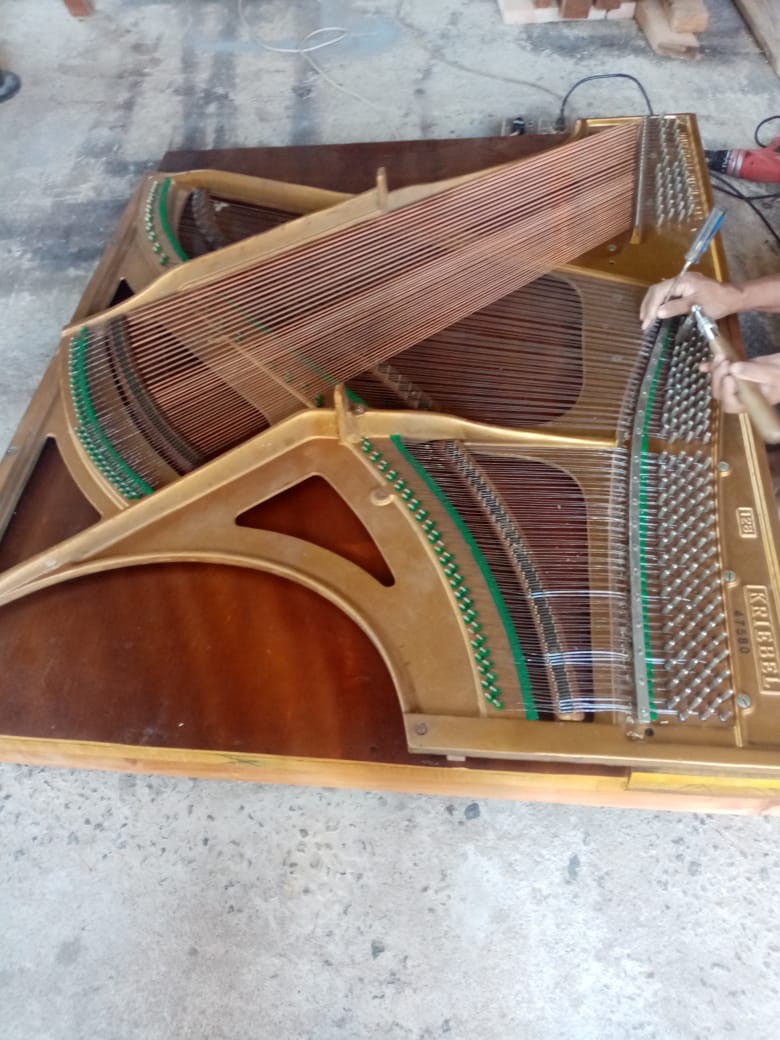
- A broken piano string can happen during tuning, mid-performance, or seemingly out of nowhere.
- Here is what actually causes it, and what happens next.
What Causes a Piano String to Break?
A broken piano string can be alarming — the sound is sudden and unmistakable — but it is rarely a sign that something has gone badly wrong with the instrument as a whole. Strings do eventually break, and understanding why helps put the moment in perspective.
Age and Metal Fatigue
Every piano string is a length of steel wire (or, for the bass strings, steel wound with copper) held under significant tension — often well over 150lbs per string across the full instrument. Over decades, the metal fatigues. Repeated flexing each time the piano is tuned gradually weakens the wire at its most stressed points, usually where it wraps around a tuning pin or bears across a bridge. Eventually, a string that has been fine for years can simply give way.
Rust and Corrosion
In Sri Lanka's humid climate, strings that haven't been properly cared for — or that sit in a piano exposed to damp conditions — are more prone to surface rust. Rust doesn't just look unsightly; it creates weak points along the wire that are far more likely to snap, particularly under the stress of tuning.
Pianos Left Untuned for a Long Time
This is one of the most common scenarios we see. A piano that has gone untuned for a year or more will have drifted well below concert pitch. Bringing it back up requires a pitch raise — a more significant increase in tension across every string at once. Aged or already-weakened strings are more likely to break during this process than during a routine six-monthly tuning, simply because more tension is being added more quickly.
What Happens If a String Breaks During Tuning
Occasionally, a string breaks during the tuning process itself, particularly on older instruments or those significantly out of tune. This is a known and accepted risk of tuning aged strings, not a sign of technician error. When it happens, we will explain the cause, and replacement of the individual string is carried out as a separate, quoted repair rather than assumed as part of the original tuning cost.
Can a Broken String Be Prevented?
Not entirely — string breakage is a natural part of a piano's long-term life. But regular tuning genuinely reduces the risk, because it avoids the large tension jumps that come with a pitch raise on a badly neglected instrument. Keeping humidity around the piano stable, and having a technician flag visibly rusted or discoloured strings early, also helps.
What to Do If a String Breaks
If a string breaks on your piano, avoid playing near that section of the keyboard until it's been assessed, and don't attempt to remove or re-tension it yourself. A qualified technician will source a matching replacement string and restring and re-tune the affected note.
If you have a broken string or notice visible rust on your piano's strings, request a repair assessment so we can address it before it affects nearby strings or the instrument's tuning stability.
Expert Piano Services
Need Professional Piano Guidance?
Master Ranjan Fernando and our team provide expert advice on piano selection, tuning, repairs, and long-term care across Sri Lanka.


Have a Piano Question?
Our master technicians and piano specialists are here to help — whether it's tuning, restoration, or finding your perfect instrument.