
Best Room Placement for Your Piano: Acoustics, Space, and Common Mistakes
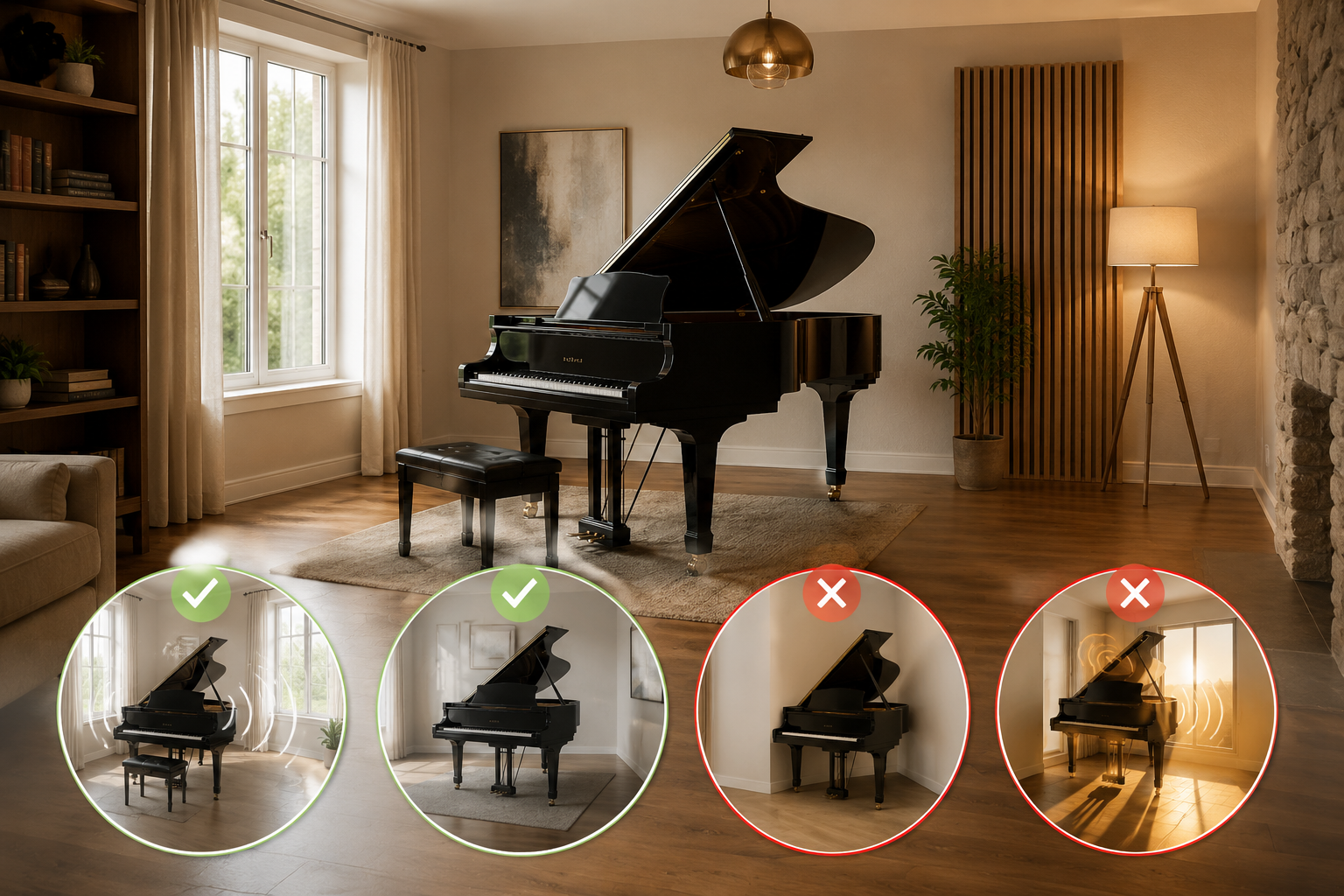
- Best Room Placement for Your Piano: Acoustics, Space, and Common Mistakes Where a piano sits in a room affects far more than convenience — it shapes how the instrument actually sounds and how long it stays in good condition.
- Here’s how to think about placement before you commit to a spot.
Best Room Placement for Your Piano: Acoustics, Space, and Common Mistakes
Where a piano sits in a room affects far more than convenience — it shapes how the instrument actually sounds and how long it stays in good condition. Here’s how to think about placement before you commit to a spot.
Interior Walls Beat Exterior Walls
An interior wall tends to have a more stable temperature than an exterior wall, which is directly exposed to outdoor heat during the day. Placing a piano against an exterior wall — especially one that gets direct afternoon sun — exposes it to far greater daily temperature swings, which stresses the wood and tuning stability over time more than an interior placement would.
Give It Breathing Room From the Wall
A piano pushed flush against a wall has its sound partially absorbed and muffled, especially for an upright, where the soundboard is at the back of the cabinet. Leaving a gap of at least a few inches — ideally 15-20cm — lets the sound project properly into the room instead of being trapped behind it.
Avoid Direct Airflow
Placing a piano directly under or beside an air-conditioning vent or a ceiling fan creates constant, uneven drying across the wood and soundboard, which can lead to cracking over time and makes tuning far less stable, since one side of the instrument is drying faster than the other.
Think About the Room’s Own Acoustics
A room with hard floors, bare walls, and large windows will make a piano sound brighter and more reflective, sometimes harshly so, while a room with rugs, curtains, and upholstered furniture absorbs more sound and produces a warmer, more controlled tone. Neither is wrong — but it’s worth knowing which effect your room naturally has before you assume the piano itself needs adjustment.
Space Requirements by Piano Type
• Upright pianos need clearance mainly at the front (for the player and pedal use) and a few inches behind for sound projection
• Baby grand pianos need enough open floor space around the curved side (the “bent side”) for the lid to open fully during play
• Full grand pianos are best suited to a dedicated room where the lid can open toward the room’s open space, projecting sound outward rather than into a wall
Common Placement Mistakes
• Positioning a grand piano with its open lid facing a wall, which reflects and muddies the sound instead of projecting it
• Choosing a spot near a window purely for natural light, without accounting for direct sun exposure across the day
• Placing an upright in a hallway or entryway “for space efficiency,” where foot traffic and fluctuating airflow from doors affect it constantly
Not Sure Where Yours Should Go?
If you’re planning a new piano purchase or reconsidering where your current one sits, book a consultation — we’re happy to advise on placement specific to your room, or assess your current setup during a routine tuning visit.
Expert Piano Services
Need Professional Piano Guidance?
Master Ranjan Fernando and our team provide expert advice on piano selection, tuning, repairs, and long-term care across Sri Lanka.
Related Articles

Have a Piano Question?
Our master technicians and piano specialists are here to help — whether it's tuning, restoration, or finding your perfect instrument.