
Featured in Divaina, 20 April 2004: The Piano Built in Sri Lanka by Master Ranjan Fernando
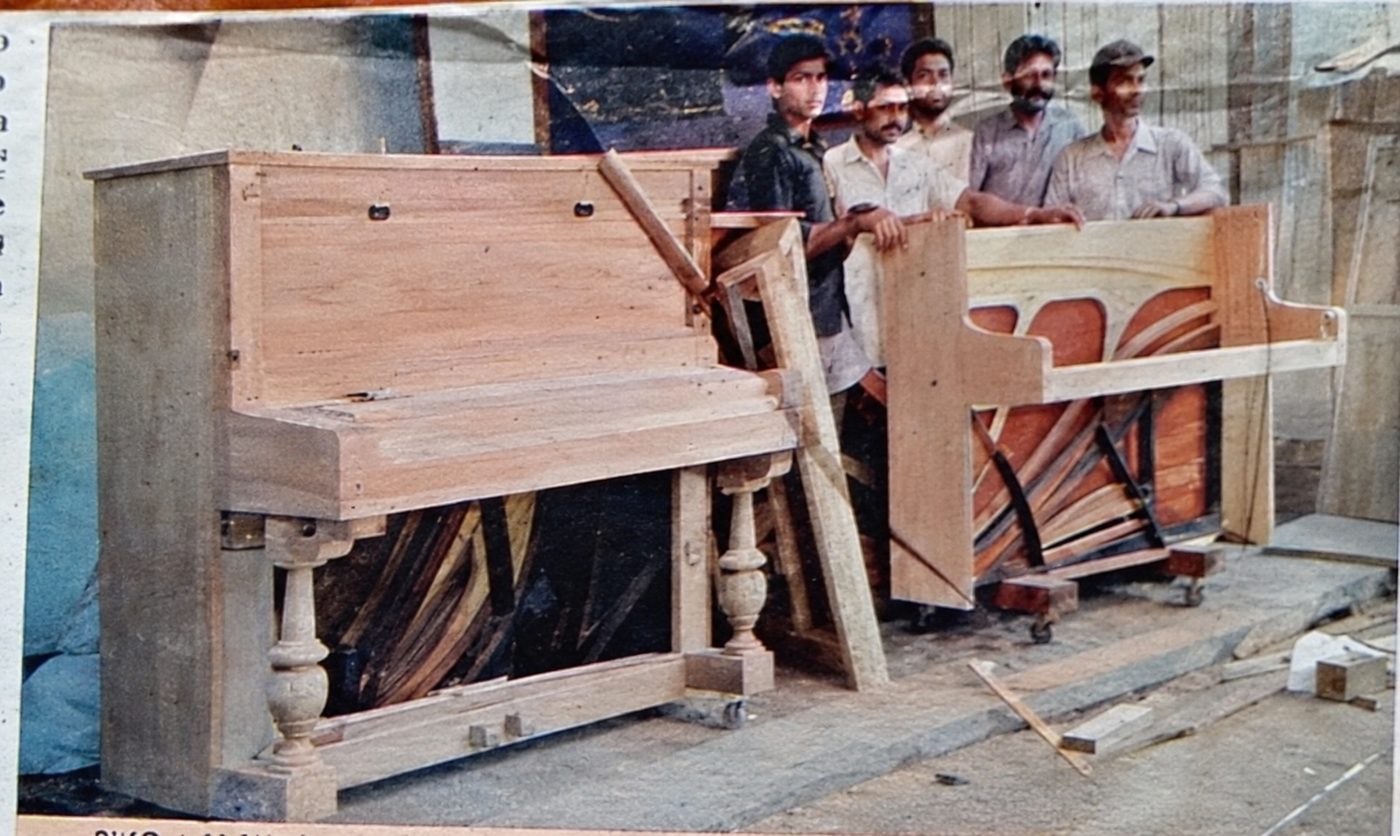
- On 20 April 2004, the Sinhala daily Divaina featured a piano built in Sri Lanka by Master Ranjan Fernando, his brothers and team.
- The piano was made for the local market, but economic circumstances prevented regular production.
- It was never sold and is still kept by the family.
Among the papers the Fernando family has kept over the years is one newspaper page they value above the rest. On 20 April 2004, the Sinhala daily Divaina ran a feature about a piano built here in Sri Lanka by Master Ranjan Fernando, together with his brothers and team.
This article explains what that feature records, what the photographs show, and what became of the piano. The original newspaper page is reproduced unaltered in the gallery below, and on our Sri Lankan-built piano heritage page.
The Facts in Brief
- Built by: Master Ranjan Fernando, his brothers and team
- Built in: Sri Lanka, intended for the local commercial market
- Featured in: Divaina, 20 April 2004
- Production: regular, ongoing production was prevented by economic circumstances
- Today: the piano was never sold. The family keeps it as a memento.
A Piano Made for the Local Market
Master Ranjan Fernando founded Ranjan Fernando Piano Centre in 1986, and most of his working life has been spent tuning, repairing and restoring pianos made by others. Building one is a different undertaking. Alongside that work, he and his brothers and team set out to build a piano in Sri Lanka, intended for the local commercial market.
That effort is what Divaina chose to feature in April 2004.
What the Photographs Show
The feature is illustrated with photographs taken in the workshop while the work was under way:
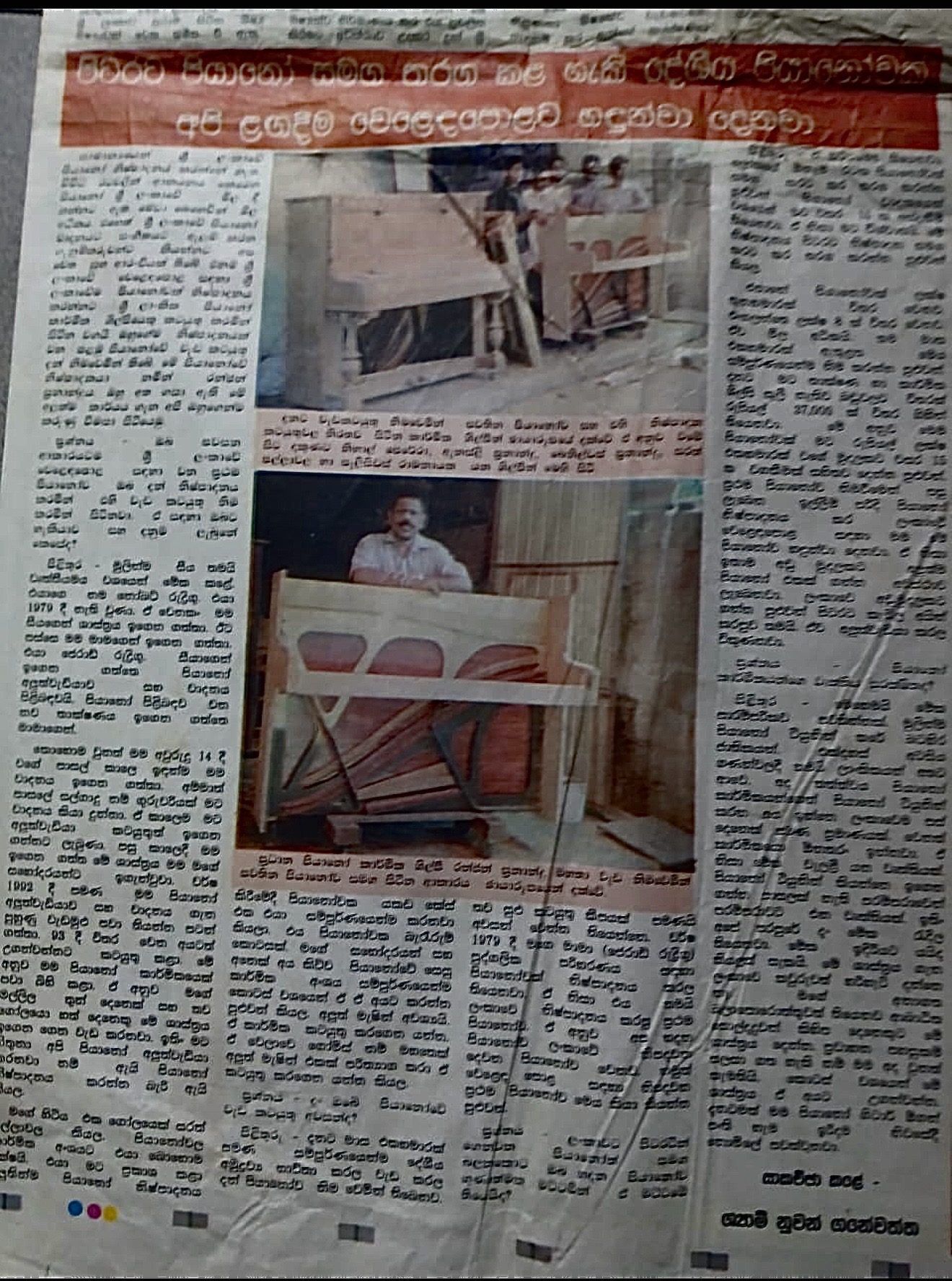
- Two upright piano cases under construction. They are shown in bare, unfinished timber, with turned front legs, the key bed and the lid in place. Members of the team stand behind them.
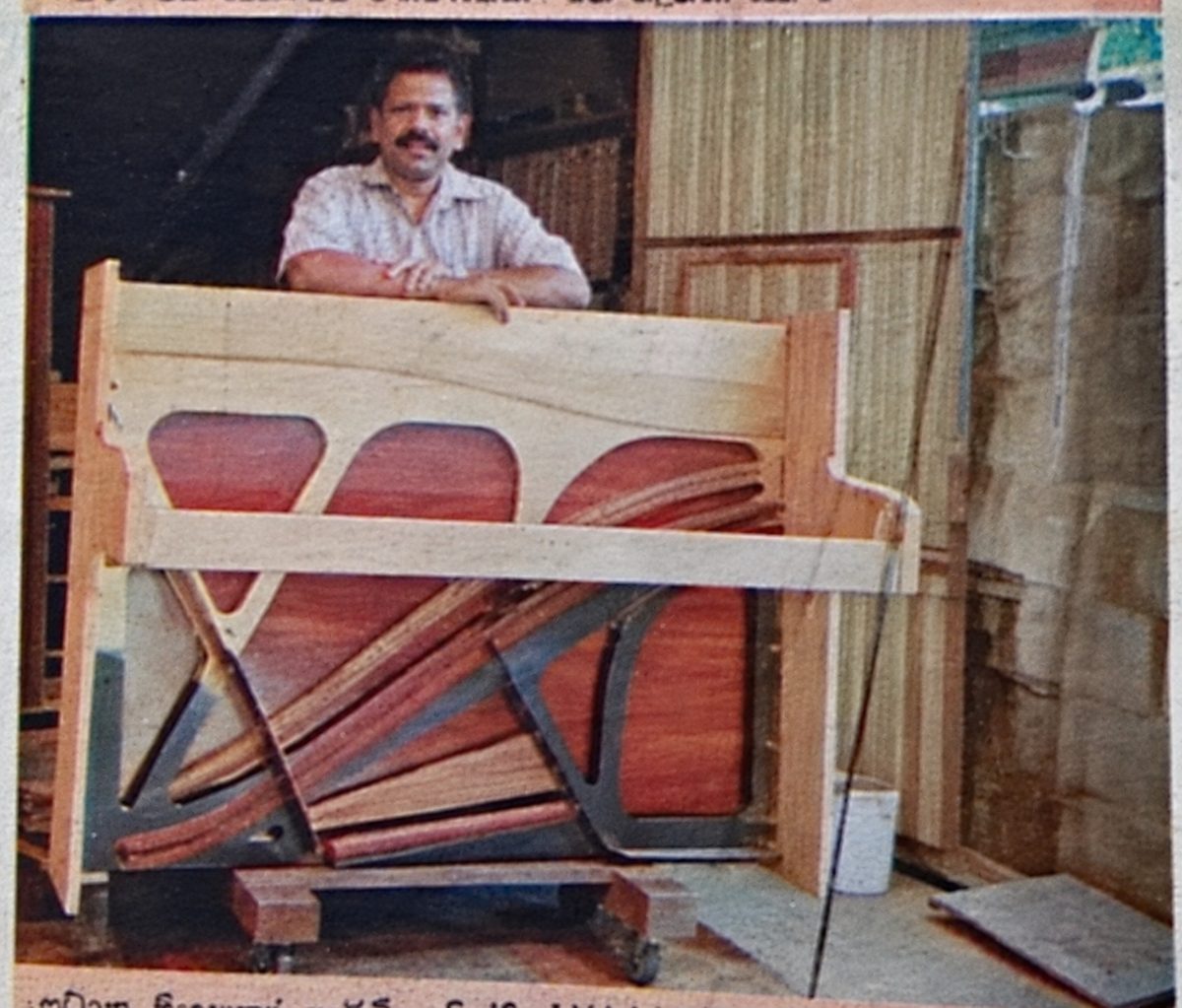
- A back frame and soundboard. This is the structural heart of an upright piano, shown standing in the workshop before the strings and action are fitted.
Both photographs are reproduced in the gallery below. Full-size scans are on our heritage page.
What Goes Into Building an Upright Piano
The photographs capture early stages of a long process. As general background, an upright piano brings together several major parts. Each one demands its own skills:
- The case (cabinet): the visible woodwork, including sides, key bed, legs, lid and fallboard. It must be strong enough to carry heavy loads and stable enough to stay square for decades.
- The back frame and soundboard: a rigid wooden back with a thin, ribbed soundboard. The soundboard turns the vibration of the strings into the sound you hear.
- The plate, pinblock and strings: together these hold many tonnes of combined string tension. The pinblock grips the tuning pins so the piano holds its tune.
- The action and keys: thousands of small parts, including hammers, dampers and felts. They must be regulated precisely so every key feels and sounds even.
Each of these has to be made or sourced, fitted and adjusted to work together. That is why piano building has always been a specialist trade.
Why Regular Production Did Not Continue
The piano was made with the local market in mind, but economic circumstances meant that regular, ongoing production was not possible. The project remained a single achievement rather than the start of a production line.
Where the Piano Is Today
The piano was never sold. The family has kept it as a memento of what Master Ranjan, his brothers and team achieved. We do not yet have a current photograph of the instrument, so for now the 2004 newspaper photographs are the best record of it.
We have reproduced the original Divaina page exactly as it was printed, rather than retelling it in our own words. The newspaper is the record; this article simply explains its context.
The Same Hands-On Care, Today
Today, Ranjan Fernando Piano Centre in Welisara, Ragama focuses on piano tuning, repairs, restoration and piano sales for customers in Colombo and throughout Sri Lanka. Master Ranjan personally carries out piano tuning and other work within his expertise, and the team he has trained handles many of the centre's services.
To read more about the family behind the centre, visit Master Ranjan Fernando and Our Heritage. If your own piano needs attention, get in touch. You can call, send a WhatsApp message or send us an enquiry.
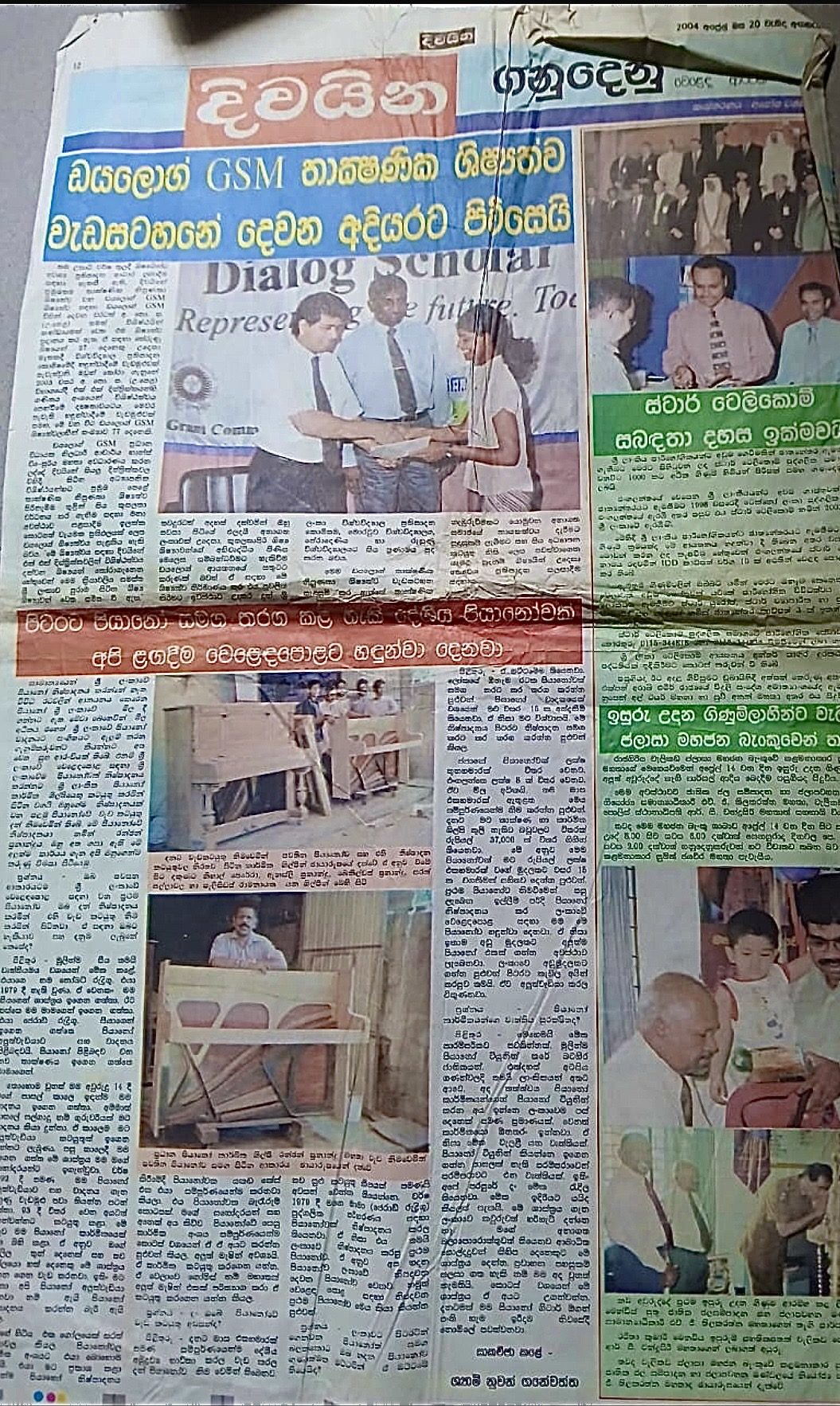
The full newspaper page, Divaina, 20 April 2004.
Our Heritage
Four Generations of Piano Heritage
Read the Rodrigo–Fernando family story and the history of the centre since 1986.

Have a Piano Question?
Our master technicians and piano specialists are here to help — whether it's tuning, restoration, or finding your perfect instrument.